Cold Plunge vs Ice Bath: Which Delivers More Benefits
Last Updated: November 8, 2026
Quick Summary
A cold plunge is a tub held at a steady cold temperature by a chiller, usually 37°F to 50°F, while an ice bath is cooled with ice whose temperature drifts as it melts. For regular use, a cold plunge is the easier option, since it stays at a set temperature without buying ice every time.
- A cold plunge is a tub kept at a set temperature, usually 37°F to 50°F, by a chiller.
- An ice bath is cooled with ice, so its temperature rises as the ice melts.
- A chiller lets you repeat the same routine each day without buying ice.
- Cold water reliably eases perceived soreness in the hours and first day after exercise.
- Beginners should start at around 50°F for 30 to 60 seconds and build up slowly.
Table of Contents
- Cold Plunge vs Ice Bath: What Actually Differs
- Cold Plunge Benefits for Recovery and Soreness
- How Long to Stay in a Cold Plunge and How Often
- Choosing a Cold Plunge Tub: Selection by Goal and Space
- Booking Your Cold Plunge Setup Through Aurevia Wellness
- Frequently Asked Questions
Cold Plunge vs Ice Bath: What Actually Differs
Most people use "cold plunge" and "ice bath" as if they mean the same thing. They are close, but the difference matters when you choose equipment. A cold plunge is a tub kept at a set, cold temperature by a chiller, usually around 37°F to 50°F. An ice bath is water cooled with ice, and its temperature drifts as the ice melts. Aurevia Wellness offers cold plunge systems, and the same confusion comes up often among buyers.
Water temperature and how it is controlled
Temperature control is the clearest practical difference. A chiller holds water at a target temperature and keeps it there between sessions. The Aurevia Wellness Chiller cools as low as 37°F and drops water by up to 8 degrees per hour starting at 70°F, so you can reach a usable temperature without buying ice every time. The American College of Sports Medicine guidance on cold-water immersion covers why consistent temperature matters when you want repeatable results.

Cold plunge versus ice bath in practice
In practice, an ice bath costs more over time and takes more effort. You need ice, a container, and a plan for drainage. A chilled system such as the AZ-Adapt, priced at $1,399.00, lets you run the same routine each day. Ice baths still work for occasional use. For a daily habit, a chiller is usually the easier path.
Cold Plunge Benefits for Recovery and Soreness
Cold immersion is most often used after hard training, and the recovery case is the best-supported reason to do it. The effect is real but narrow: cold water reliably takes the edge off perceived soreness and the feeling of heavy legs in the hours and first day after exercise, which is why athletes keep the habit. What it does not reliably do is speed tissue repair, boost immunity, or produce long-term health gains, those claims outrun the evidence, and a calibrated comparison should say so plainly.
Delayed-onset muscle soreness and inflammation
Delayed-onset muscle soreness, or DOMS, usually peaks 24 to 72 hours after unfamiliar or intense exercise and fades on its own within a few days. Cold water causes blood vessels near the skin to narrow (vasoconstriction), which reduces local blood flow and can dampen the swelling and nerve sensitivity that make soreness feel worse.
On inflammation, the picture is more nuanced than marketing suggests. Some inflammation is a necessary signal that drives adaptation, so blunting it broadly is not automatically good. National Institutes of Health review of cold-water immersion and muscle recovery summarizes the current findings, including where results are still unclear. A useful way to read the literature is to separate outcomes:
Strength and muscle-growth trade-offs
This is the trade-off most benefit lists skip. If building size or strength is your main goal, keep cold immersion away from heavy lifting, a common pattern is to plunge on rest days or at least several hours after a strength session, and to save post-workout plunges for endurance work, competition days, or blocks where recovery between hard sessions matters more than maximizing the growth stimulus. If recovery between hard sessions is the goal, a cold plunge fits well into the routine; if adaptation is the goal, timing is the lever.

How Long to Stay in a Cold Plunge and How Often
Duration and frequency only make sense together with temperature and acclimation, and that three-way relationship is where most generic advice falls short. A 50°F plunge for three minutes is a very different stimulus from a 39°F plunge for three minutes, and a beginner's cold tolerance changes what is safe from week to week. The practical framework below is cautious and evidence-informed rather than a prescription.
Temperature, duration, and acclimation
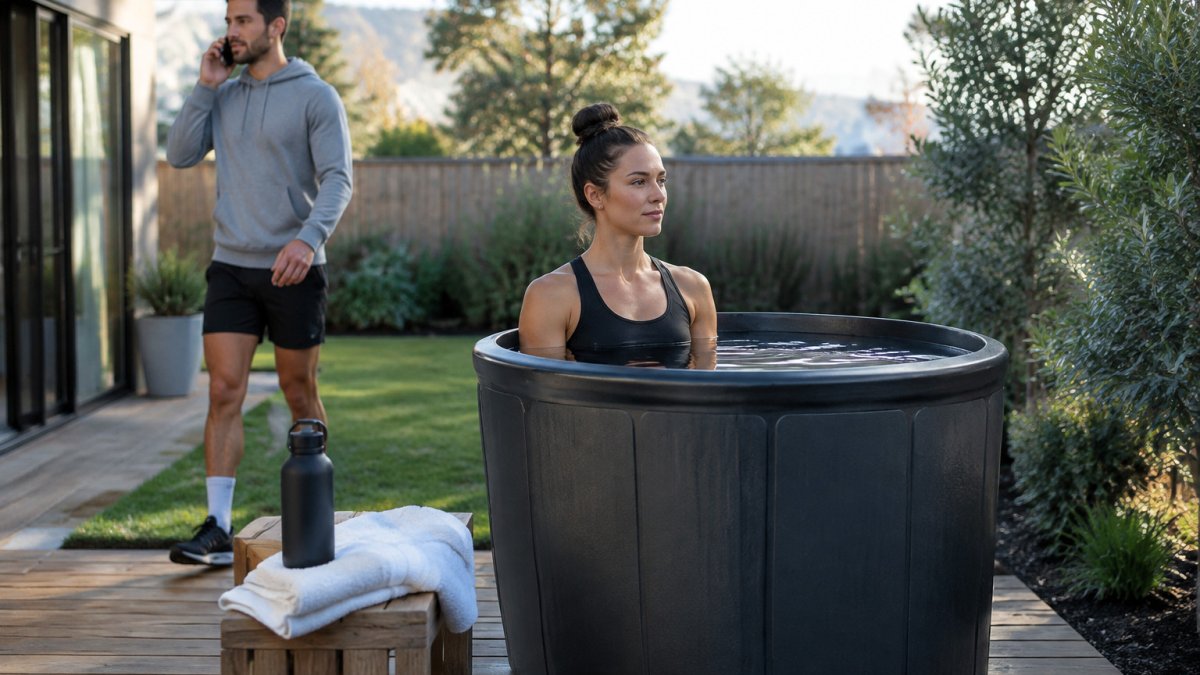
Cold plunge systems typically hold water in the 37°F to 50°F range, while ice baths drift upward as ice melts. As a rule of thumb, the colder the water, the shorter the exposure should be, and the more gradually you should build. A common pattern for beginners is:
- Weeks 1-2: 30 to 60 seconds at the warmer end of your chiller's range (around 50°F), two to three times per week, focusing on controlled breathing.
- Weeks 3-4: 1 to 2 minutes at the same temperature, adding time before adding cold.
- Weeks 5+: 2 to 3 minutes, lowering the set point a few degrees at a time as comfort allows.
Most experienced users settle at 2 to 4 minutes per session, three to four times per week, and recovery needs vary by person and training load. Longer is not better: beyond a few minutes, the marginal benefit is small and the risk of overcooling rises. Acclimation is real, the cold shock response (gasping, rapid breathing, rising heart rate) softens with repeated exposure, but it takes weeks, not days, so resist the urge to chase a personal best in temperature.
Safety and who should be cautious
Cold shock can cause rapid breathing and make you lose your footing, and the cardiovascular response is the main concern. Check with a clinician before starting if you have a heart condition, high blood pressure, or circulation problems. Never plunge alone when you are new to cold water, keep your head above water, and get out immediately if you feel numbness, dizziness, confusion, or chest discomfort.
Watch out: The most common mistake is adding cold and time in the same week, change one variable at a time so you can tell what your body is actually tolerating.
Choosing a Cold Plunge Tub: Selection by Goal and Space
Start with your goal and the space you have. A backyard setup with a dedicated chiller suits daily use. A compact option suits a bathroom or small patio.
- Home bathtub users: The AZ-Adapt at $1,399.00 extends up to 7 inches to fit almost any tub and works with the 0.8hp chiller.
- Large-space owners: The Kooru Cold Plunge Tub at $7,999.00 is handcrafted from selected redwood and needs only a 110V outlet.
- Portable or shared use: The Nicebeam Cryo Pro at $2,499.00 inflates, folds into a carry bag for storage, and has Water IN and Water OUT ports for connecting a chiller.
Best for: Owners who want a permanent backyard setup with a durable tub. Skip if: Your space cannot fit a tub of this size.

The table below sets out the three tub options covered in this section, with the price, fit and key feature stated for each.
| Tub | Price | Key feature |
|---|---|---|
| AZ-Adapt | $1,399.00 | Extends up to 7 inches to fit most tubs |
| Kooru Cold Plunge Tub | $7,999.00 | Handcrafted from selected redwood; needs 110V outlet |
| Nicebeam Cryo Pro | $2,499.00 | Inflates and folds into a carry bag |
Price
Booking Your Cold Plunge Setup Through Aurevia Wellness
Once you know your goal and space, the next step is a complete setup. Browse the Aurevia Wellness Chiller at $999.00 to pair with the tub you choose.
BUTTON: Shop Cold Plunge Chillers CARD_TITLE: Cold plunge or ice bath, which fits your routine? CARD_TEXT: Aurevia Wellness builds chilled cold plunge systems that hold a set temperature for daily use.
Frequently Asked Questions
Is a cold plunge better than an ice bath?
Neither is better across the board. A cold plunge is a tub with a chiller that holds water at a set temperature, often near 37°F to 50°F, so you do not add ice each session. An ice bath uses ice to reach similar temperatures and costs more to repeat. Both deliver the same cold-water exposure when the temperature and duration match. The practical difference is convenience, running cost and how consistently you can hit the same temperature. Choose the cold plunge if you plan to use it several times a week.
Is a 1 minute cold plunge enough?
A one-minute session can produce a cold response, but Beginners often start with 1 to 3 minutes and build up. Shorter sessions are a reasonable starting point, but they are not a proven minimum for recovery outcomes. Track how you feel the next day and adjust duration and temperature gradually.
What temperature should a cold plunge be?
Most people use water between about 50°F and 59°F for regular sessions. Colder water, down to around 37°F, is used by experienced users and produces a stronger cold shock response. Beginners should start warmer and lower the temperature over several weeks. Keep your Aurevia chiller set to a target you can hold for your full session, and avoid extreme cold if you have heart or circulatory conditions without medical clearance.
Are cold plunges and ice baths safe for everyone?
Not for everyone. People with heart disease, high blood pressure, or circulation problems should be cautious. Never plunge alone, and get out immediately if you feel chest pain, dizziness or numbness. Ask a doctor before starting if you have any cardiovascular or medical condition. Safety depends on temperature, duration and your health status, not on the tub type.