Outdoor Sauna vs Gym Recovery: Which Works Better
Last Updated: November 13, 2026
Quick Summary
Neither option has clearly proven superiority for muscle recovery, since the research on sauna use after exercise is still developing. A home outdoor sauna offers private, on-demand access, while a gym offers shared equipment, staff and no installation. The better choice depends on how often you will realistically use it.
- Sauna use after exercise may improve perceived recovery, but effects on actual soreness are less clear.
- Entry-level outdoor saunas start at $6,999.00 for a three-person hybrid cabin.
- Outdoor saunas often need a dedicated electrical circuit, and an electrician may be required.
- Check local zoning and homeowner association rules before choosing where a cabin can sit.
- Drink water before and after sauna sessions to reduce dehydration risk.
Table of Contents
- Outdoor Sauna vs Gym Recovery: How the Two Options Compare
- What Sauna Use After a Workout May Do for Muscle Recovery
- Cost, Convenience and Outdoor Practicalities Side by Side
- Sauna After Workout and Cold Plunge: Pairing Recovery Tools
- Choosing Your Recovery Setup: Which Option Fits Your Goals and Your Next Step
- Frequently Asked Questions
Outdoor Sauna vs Gym Recovery: How the Two Options Compare
A key question for many people is whether a sauna in your own backyard can do what a gym recovery session does. The honest answer is that they overlap in some ways and not in others. Recovery after training is the goal for most people, and the research on sauna use after exercise is still developing, so the case for either option rests more on practicality and personal routine than on settled science.
For many active adults, a home option can reduce the friction that makes recovery easy to skip. Driving to a gym, waiting for a sauna to heat, and fitting it around a schedule all cost time. A backyard cabin can be used whenever the workout ends.
The gym still has real advantages. Staff, shared equipment, and a built-in environment make it a good fit for people who want structure. Outdoor sauna use is a different kind of experience, and the comparison below treats both on their own terms.
What Sauna Use After a Workout May Do for Muscle Recovery
Sauna use after exercise is often described as a way to ease soreness and help the body feel ready for the next session. Heat exposure can raise skin temperature and circulation, and some people report feeling looser afterward. Those reports are common, but they are not the same as proof that recovery is faster.
A practical way to think about it is to separate three questions: whether heat changes how sore you feel, whether it changes how well you perform later, and whether it changes tissue repair itself. Current evidence is strongest on the first and weakest on the last.
Muscle soreness, perceived recovery and heat exposure
Perceived recovery is how rested and ready you feel, and heat exposure seems to influence it for many people. The warmth is relaxing, the session gives you a fixed block of downtime, and that routine can make a hard week feel more manageable.
The effect on actual soreness is less clear. Some people notice less stiffness the next morning, while others notice nothing measurable. If sore muscles are your main problem, expect modest, subjective benefits rather than dramatic ones.
Sauna before or after a workout: timing and subsequent performance
Most people use a sauna after training, since that is when recovery matters. Using heat before a session is less common and carries a different risk: heavy sweating before lifting or cardio can leave you dehydrated and less sharp.
If you do use a sauna after a workout, keep sessions moderate in length and drink water before and after. Dehydration is a practical concern to keep in mind during sauna use.
Cost, Convenience and Outdoor Practicalities Side by Side
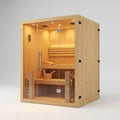
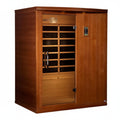
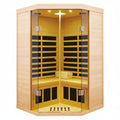
The cost comparison depends on how often you would use each option, so the useful number is not the sticker price but the cost per session. A gym membership is an ongoing monthly expense that you pay whether or not you show up. An outdoor sauna is a one-time purchase plus electricity, maintenance, and the occasional repair. Aurevia Wellness's catalog includes saunas priced from $6,999.00 for a three-person hybrid cabin up to $36,092.00 for a larger Thermasol model.
To compare fairly, divide the purchase price by the number of sessions you expect over the life of the unit. A $6,999.00 cabin used three times a week for five years works out to roughly $9.00 per session before electricity, while a $150.00 monthly gym membership used the same number of times is about $12.50 per session. Change the assumptions and the answer changes: use the sauna once a week and the per-session cost climbs past $25.00, which is why honest use estimates matter more than the headline price.
Ongoing costs are easy to underestimate. A traditional electric stove in the 6 to 8 kW range draws meaningful power during a session, and infrared cabins draw less but run longer. A common pattern is for owners to notice the bump on their utility bill in the first winter and then adjust session length. Maintenance for outdoor saunas generally involves periodic checks of the exterior, door seal, heater and ventilation. Ongoing costs are real, and they are a factor to weigh against a gym membership.
Outdoor installation brings practical questions that a gym never raises. Outdoor saunas often need a dedicated electrical circuit, and an electrician may be required for installation. Check local zoning and homeowner association rules before you buy, because setback requirements and noise or appearance rules can affect where a cabin can sit. Weather matters too. A well-built exterior made from weather-appropriate wood and a waterproof finish can hold up better over time.

Convenience is where a home sauna earns its keep, and it is also where the comparison is most lopsided. The Golden Designs Gargellen, for example, is a 5-person hybrid outdoor sauna at $8,999.00 that offers both a Harvia 8 kW traditional stove and a PureTech full spectrum infrared mode. The traditional stove runs at 170-185°F, while the infrared mode runs at 118-132°F. You choose one mode per session. A gym sauna is shared and available during staffed hours; a home cabin is private and can be used whenever the workout ends.
| Factor | Outdoor sauna at home | Gym recovery |
|---|---|---|
| Upfront cost | One-time purchase, from $6,999.00, plus circuit and installation | No equipment purchase |
| Ongoing cost | Electricity, annual stain, occasional parts | Monthly membership fees |
| Cost per session | Falls with use; roughly $9.00 at 3x/week over 5 years on the entry model | Fixed, whether used or not |
| Access | Available any time, private | Limited to opening hours, shared |
| Installation | Dedicated 240-volt circuit, zoning check | None |
| Maintenance | Annual stain, seal and heater checks | Handled by staff |
| Weather exposure | Yes; site and cover matter | None |
Watch out: a cheap cabin on a bad site, with poor drainage or no shade, will cost more in repairs and lost use than the price difference suggests, so budget for the site as carefully as for the unit.
Sauna After Workout and Cold Plunge: Pairing Recovery Tools
Many people pair sauna use with cold immersion, alternating heat and cold in one session. The routine is popular, but the evidence for combining them is thin, so treat it as a preference rather than a proven protocol. The more useful question is what each tool does on its own. Heat tends to make people feel looser and more relaxed, while many people find cold immersion helps them feel less sore in the short term. Stacking them does not automatically multiply the benefit, and the order, the temperature, and the time spent in each phase all change the experience.
A common pattern is heat first, then a brief cold plunge, then rest. Some practitioners reverse the order and finish with heat, which feels better to many people but has less support as a recovery strategy.
If you want to try this pairing at home, a 79-gallon insulated cold plunge tub with a chiller-ready design and a snug cover is one option. A 1/2 HP water chiller rated for tubs up to 132 gallons can keep the water at temperature. Both are sold separately from the saunas above and suit people who want a complete outdoor recovery setup.
Stop if you feel dizzy, unwell or overheated. Drink water before and after, and do not treat the pairing as a substitute for sleep, food, or an actual easy day. Watch out: going straight from a hot cabin into a cold plunge when you are already dehydrated is the most common way this routine goes wrong, so hydrate first and keep the first cold phase short.
Choosing Your Recovery Setup: Which Option Fits Your Goals and Your Next Step
The right choice depends on what you need. If you want a shared environment with equipment and staff, the gym is a sensible choice. If you train at home, want recovery available on your schedule, and can cover the upfront cost, an outdoor sauna is worth considering.
Think about three things: how often you will realistically use it, whether your backyard can take a dedicated circuit, and whether you prefer traditional heat or infrared. Matching the option to your actual routine matters more than any general ranking.
If you are ready to look at specific models, start with the Golden Designs Carinthia at $6,999.00 for a three-person hybrid, or the Gargellen at $8,999.00 if you need space for five. Our team at Aurevia Wellness can help you compare them against your space and routine, and explore our outdoor sauna range to see the full set of options.

Frequently Asked Questions
Is a sauna good for gym recovery?
A sauna can support recovery after resistance training by raising skin temperature and circulation, and some people find it reduces how sore they feel. The evidence is still limited and mostly short-term, so a sauna works best as a supplement to sleep, nutrition and training load rather than a replacement for them. Sessions in the 170 to 185 degree Fahrenheit range, common in traditional saunas, are generally well tolerated by healthy adults who stay hydrated. Anyone with heart conditions, pregnancy or blood pressure concerns should check with a doctor first.
Can an outdoor sauna replace recovery equipment at the gym?
An outdoor sauna at home can cover the heat-based part of a recovery routine without a gym membership, which makes it a practical option for people who train at home or who want daily access. It does not replace every gym recovery tool, such as foam rollers or a dedicated stretching area, and it does not address sleep or nutrition.
Is it better to use a sauna before or after a workout?
Most people use a sauna after a workout for recovery, because heat exposure afterward is aimed at easing soreness and winding down. Using heat before lifting can make a session feel harder, since heat raises fatigue and reduces hydration, so a sauna before training is generally less suitable for performance-focused sessions. Drink water before and after.
How long should you stay in a sauna after a workout?
Leave the sauna if you feel dizzy, nauseous or unusually fatigued, and rehydrate with water or an electrolyte drink. Sessions after heavy or long training sessions may need extra fluid replacement.