Red Light Therapy for Muscle Recovery: What to Know
Quick Summary
Red light therapy for muscle recovery uses red and near-infrared light, which cells may absorb to support energy production, circulation and inflammation control. Research is still developing, and results vary by device, dose and person, so treat it as one possible recovery tool rather than a guaranteed fix.
- Session length has no single agreed standard; many users aim for several minutes per area.
- Many users treat a few sessions per week as a starting point and adjust from there.
- Start with shorter sessions and stop if you notice discomfort or skin irritation.
- Follow the manufacturer's instructions for distance and exposure time.
- Red light therapy is not a substitute for medical care; talk to a doctor about injuries or lasting pain.
Table of Contents
- How Long to Use Red Light Therapy for Muscle Recovery
- How to Use Red Light Therapy for Muscle Pain and Injury
- Frequently Asked Questions
How Red Light Therapy for Muscle Recovery Works
Red light therapy for muscle recovery is a topic many athletes and wellness fans ask about, and the answer is more cautious than most ads suggest. Red and near-infrared light are thought to affect cells, mainly through how mitochondria produce energy. Research on this idea is still developing, and results vary by device, dose and person.
Photobiomodulation is the term researchers use for this kind of light exposure. The light is absorbed by cells, which may support energy production, circulation and inflammation control. Results are not guaranteed, so treat it as one possible recovery tool, not a cure.
Last Updated: November 7, 2026
How Long to Use Red Light Therapy for Muscle Recovery
There is no single agreed session length. Many users aim for several minutes per treatment area, often a few times a week, and adjust based on how the device is rated. You can browse red light therapy panels to compare options for targeted use. Follow the manufacturer's instructions for distance and exposure time.
- Start with shorter sessions and see how your body responds
- Keep consistent timing so you can judge results
- Stop if you notice discomfort or skin irritation
Full-body panels, such as the 3600W Red Light, are designed for larger treatment areas.

The article suggests a few practical habits for session length and consistency.
| Guideline | What to do | Note |
|---|---|---|
| Session length | Several minutes per area | Follow manufacturer instructions |
| Frequency | A few times a week | Adjust based on device rating |
| Starting point | Shorter sessions first | Watch how your body responds |
| Consistency | Keep timing steady | Helps you judge results |
| Stop signal | Discomfort or skin irritation | Stop using the device |
How to Use Red Light Therapy for Muscle Pain and Injury
Red light therapy is not a substitute for medical care. If you have a muscle injury, pain that lasts, or a health condition, talk with a doctor before starting. For general soreness after training, many people use a panel after workouts as part of a wider routine that includes sleep, hydration and rest.
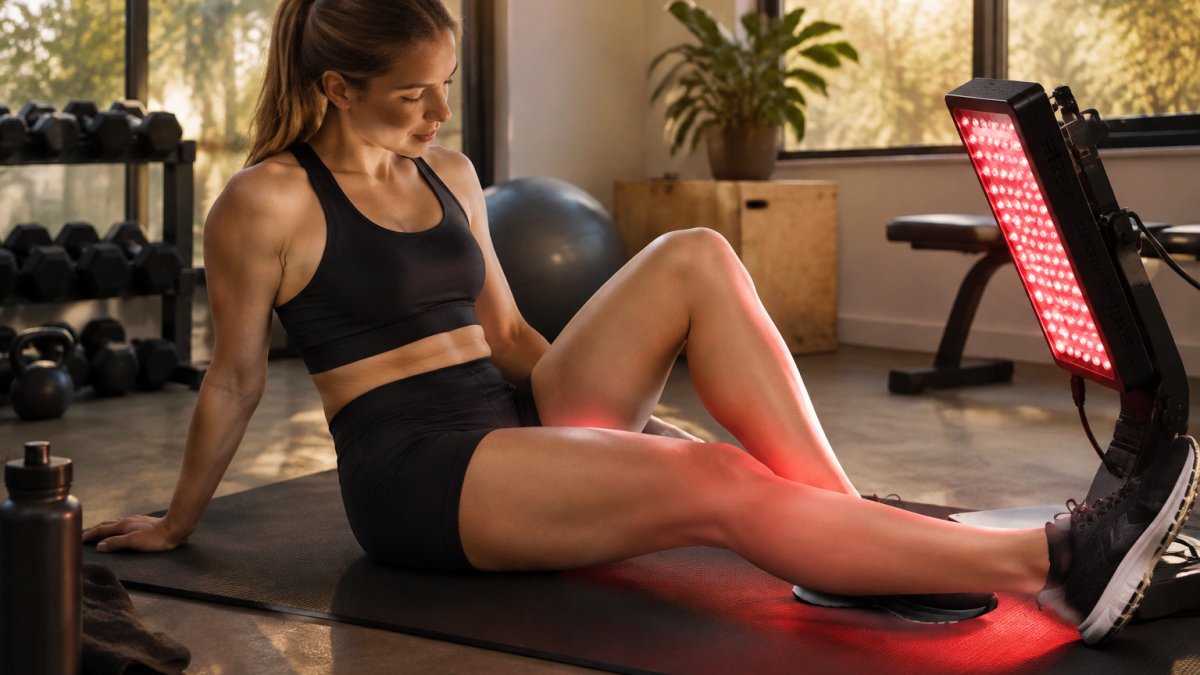
For higher-output coverage, consider the 1000W Red Light Panel. Place the panel at the recommended distance and follow the product instructions.

Watch out: never stare directly into the lights, and avoid use on areas with open wounds unless a doctor approves it.
Frequently Asked Questions
Does red light therapy help muscle recovery?
Some studies suggest red and near-infrared light may reduce muscle soreness and support recovery after hard training, but the evidence is mixed and many trials are small. Results vary with wavelength, irradiance, dose and timing. Treat it as a possible supplement to rest, sleep, nutrition and training load rather than a replacement for them. If you have an injury or persistent pain, see a clinician before relying on light therapy.
How long should you use red light therapy for muscle recovery?
There is no universally validated protocol for session length, so follow the manufacturer's dose guidance. Follow the manufacturer's dose guidance for your specific device, since irradiance at the skin depends on distance and panel output. Track soreness and performance over several weeks to judge whether your routine is working for you.