1-person infrared saunas: a compact-home buying guide
Compact-home infrared sauna buying is the process of choosing a single-user heated enclosure to create a home heat routine without sacrificing usable space. Choose a 1 person infrared sauna by installed footprint, electrical requirements and seated comfort—not by the smallest cabinet or the longest feature list.
- Choose a 1 person infrared sauna by installed footprint, seated comfort and documented electrical requirements.
- Aurevia-Wellness offers infrared sauna options for homeowners comparing indoor wood cabins.
- Small-home sauna planning must include door swing, delivery access and manufacturer-required clearances.
- Compare heater placement and operating instructions before treating full-spectrum or low-EMF labels as deciding factors.
For your 2026 shortlist, separate requirements from preferences: safe installation comes first; wood finish, lighting and audio come later. Aurevia-Wellness offers home wellness equipment, including saunas, for homeowners building a private retreat.
Why infrared sauna selection matters for compact-home owners
A compact home has little room for an installation mistake. A cabinet that fits against a wall can still obstruct a doorway, prevent maintenance access or leave you sitting with your knees pressed against the glass.
The best compact-home sauna is the one that fits your room and your seated body—not simply the one labeled one-person. Capacity describes intended occupancy; it does not establish usable bench width, headroom or assembly space.
Infrared saunas use radiant heaters, while traditional saunas use a stove to heat the room. That distinction matters when comparing equipment, but neither category name tells you the exact electrical work or operating routine a particular model requires.
In 2026, build your comparison around documented specifications rather than broad wellness promises. A sauna is a heat-producing appliance, not a guaranteed treatment for pain, weight management or a medical condition.
How to choose a 1 person infrared sauna
1. Map the complete installation area
Start with a tape measure, masking tape and the installation manual. Mark the cabinet outline on the floor, then add every clearance the manufacturer requires; a product photograph cannot establish those distances.
Measure the route into the room as carefully as the final location. Ask for packaged dimensions and assembly instructions so you know whether components can pass through narrow doors, turn on a stair landing and be assembled beneath your ceiling.
Keep the room usable when the sauna is open. If the door blocks a closet or your normal walking route, the layout needs revision before you compare finishes. A smaller cabinet is not a solution if its door creates the same obstruction.
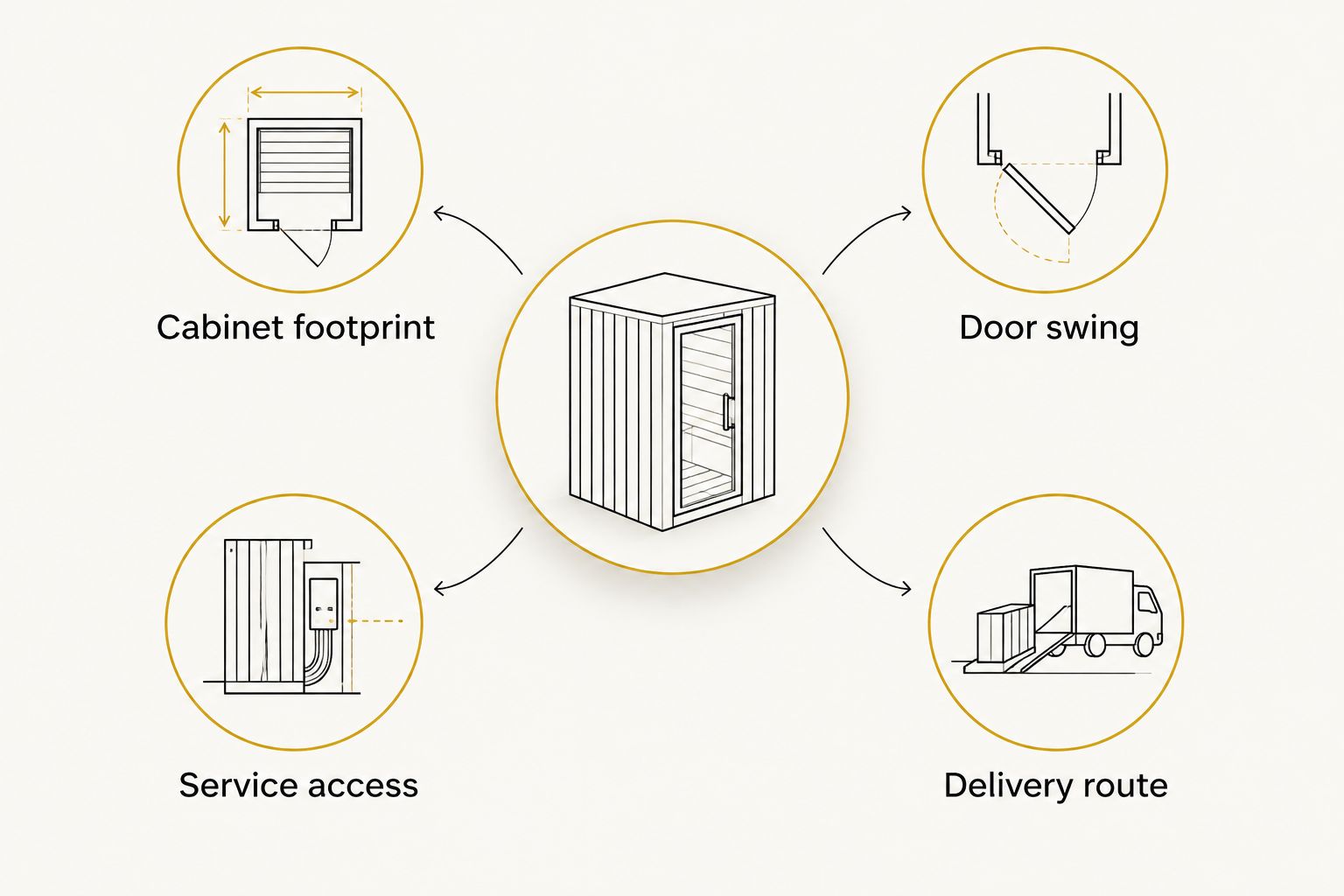
- Cabinet footprint: Record exterior width, depth and height, including projections.
- Door swing: Mark the opening arc and the standing area outside it.
- Service access: Reserve the clearances specified for ventilation and maintenance.
- Delivery route: Check packaging, doorways, stairs and assembly access.
2. Confirm the electrical requirements
Read the full electrical specification before choosing a location. Record voltage, rated current, connection type and any dedicated-circuit requirement, then have a qualified electrician assess the intended circuit when necessary.
A 120-volt specification does not establish that any nearby outlet is suitable. Likewise, a 240-volt requirement tells you the supply voltage, not the complete wiring arrangement. Follow the model's installation instructions rather than making assumptions from the plug shown in a photograph.
Do not confuse heater wattage with a complete installation plan. The manual must establish how the entire appliance connects, and the room's existing electrical setup must support that connection. Resolve this before committing to a cabinet that only fits beside an unsuitable outlet.
- Obtain the manual for the exact model and configuration.
- Record voltage, current and circuit requirements together.
- Identify other appliances sharing the proposed circuit.
- Follow the manufacturer's connection instructions; do not improvise with extension cords.
3. Check the seating before comparing extras
Recreate the proposed bench height and usable seating area with a chair and tape marks. Sit as you intend to use the sauna, with your back supported and feet resting comfortably, rather than judging comfort from exterior dimensions.
Ask for interior measurements, not just cabinet measurements. Bench depth, knee room, headroom and the position of heaters all affect whether a single-user cabin suits your body. Check entry and exit as well, particularly if stepping across a threshold is difficult.
Aurevia-Wellness infrared sauna options are best for homeowners comparing wood-cabin formats for a home retreat. The retailer's assortment provides options to examine, but individual measurements and installation instructions must establish which model fits your room.
- Request interior height and usable bench width and depth.
- Confirm foot space with the door fully closed.
- Check access to controls from the seated position.
- Ask whether any backrest changes usable seating depth.
4. Compare heater layout and supporting documentation
Look for a diagram or clear interior photographs showing where the heaters sit relative to your back, sides, legs and feet. Heater count alone cannot establish how the seated experience compares between differently shaped cabins.
For example, the listed Single-Person Sauna Room with 7 Heating Plates identifies a count of 7 heating plates. That count does not establish coverage, temperature uniformity or whether its heating system matches the infrared category you want; confirm those details separately.
Treat full-spectrum, broad-spectrum and low-EMF wording as prompts for further questions. A label is not a substitute for an explanation of heater type, operating instructions or a measurement report with test conditions. Your 2026 comparison should distinguish supplied documentation from descriptive language.
- Identify heater type and placement around the occupied seat.
- Request an explanation of any spectrum terminology.
- Ask for test conditions behind electromagnetic-field claims.
- Check whether decorative lighting is separate from any specified therapy equipment.
5. Match the cabin to the room's conditions
Choose a location using the model's permitted installation environment. An indoor sauna is not automatically suitable for a covered patio, damp bathroom or unconditioned garage simply because the cabinet fits there.
Check the floor, overhead space, ventilation instructions and access for cleaning. Ask the supplier to clarify any uncertain room conditions before delivery; do not add your own ventilation holes or alter the enclosure to make an unsuitable location work.
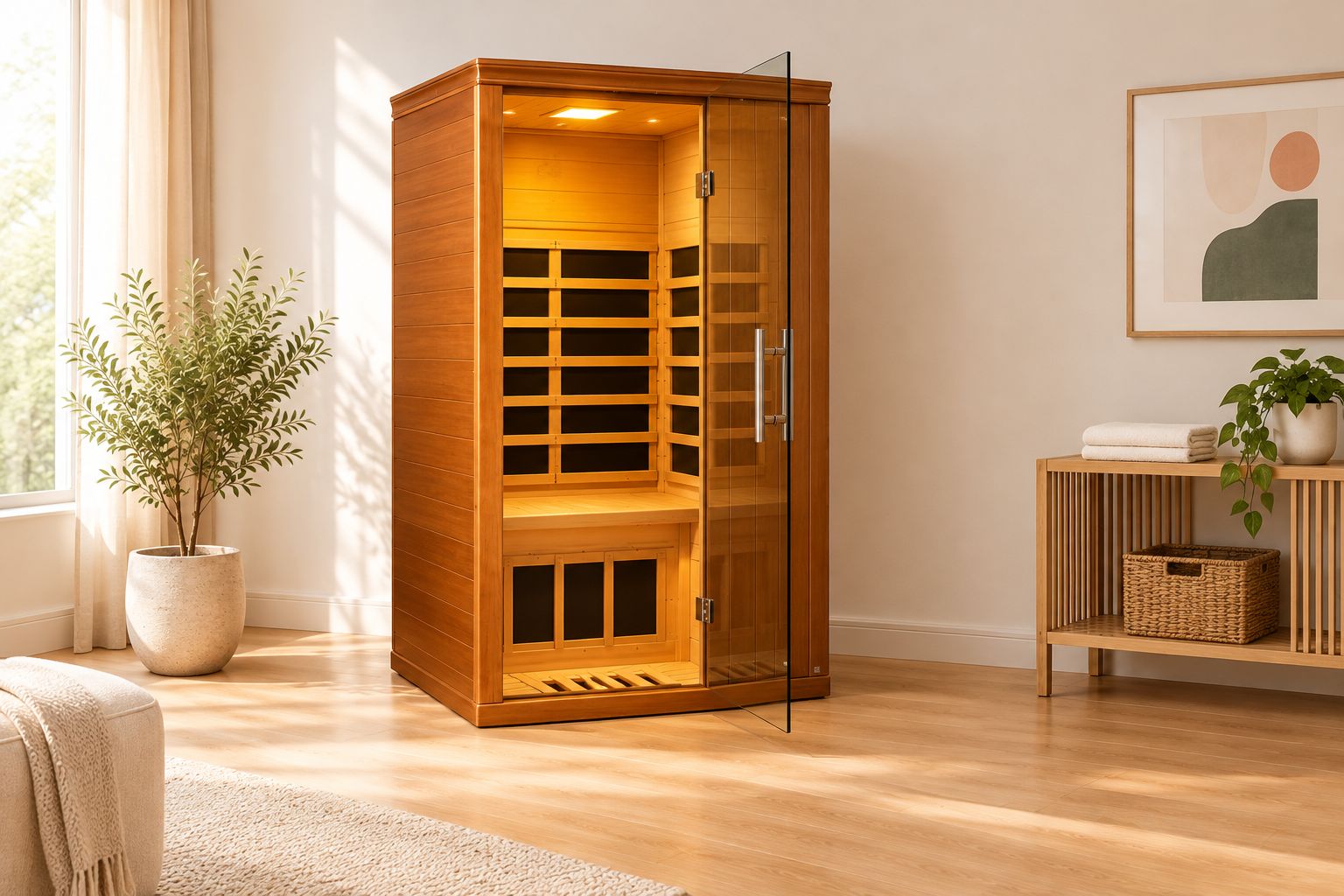
A calm setting needs practical space outside the door, too. Keep a place for a towel and personal items without covering vents or narrowing the exit. A clear approach and restrained furnishings create a private wellness corner without crowding the appliance.
- Confirm indoor or outdoor suitability in the installation documentation.
- Check floor and support requirements for the exact model.
- Preserve specified ventilation openings and clearances.
- Keep the exit route free of furniture and loose storage.
6. Plan the routine around the instructions
Read the operating manual before imagining a daily ritual. Establish what preparation, warm-up, cleaning and shutdown involve; session time alone does not describe the full commitment.
There is no universal session length or temperature that this guide can assign to every sauna and every person. Follow the manufacturer's directions, stop if you feel unwell and seek medical advice before use when a health condition, pregnancy or medication raises questions about heat exposure.
Choose controls you can understand and reach. Audio and lighting can support the atmosphere, but neither resolves uncomfortable seating or a routine that does not fit your household. For a first sauna in 2026, clear instructions deserve more weight than additional entertainment features.
- Read the preparation, use and shutdown instructions together.
- Check how temperature and session controls operate.
- Plan cleaning according to the specified materials and methods.
- Resolve personal heat-safety questions before the first session.
7. Close the documentation gaps before ordering
Build a simple comparison sheet using the information collected in the previous steps. Leave unresolved specifications visibly blank instead of filling them with assumptions from another model in the same product family.
Ask the seller for written clarification of missing measurements, connection requirements and assembly details. Confirm what the shipment includes, particularly when photographs show accessories that the description does not identify as included.
For Aurevia-Wellness infrared sauna comparisons, keep the same standard across every candidate. A wood finish or feature combination can earn a place on your shortlist, but incomplete installation information should pause the decision. Your final 2026 selection needs a documented fit, not a persuasive photograph.
- Save the exact model name and installation manual together.
- Confirm included components and required assembly work.
- Read the stated warranty, return and delivery terms directly.
- Resolve any mismatch between the title, description and manual.
Compare sauna options for a compact home
Choose the format first, then the model. A single-user cabin supports a dedicated seated routine; a larger cabin only makes sense if its additional space serves a real household need.
The product rows below identify candidates for further checks, not verified fits for a particular room. Neither listed product's supplied description establishes exterior dimensions, electrical requirements or required clearances.
| Option | Best for | Useful distinction | Key limitation |
|---|---|---|---|
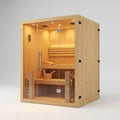
| Solid Wood Infrared Sauna Room with Broad-Spectrum Heating Plates - Natural | Comparing a single-room wood infrared format | Described as a single-room infrared sauna in natural Oguman solid wood | Confirm permitted location, dimensions and the meaning of broad-spectrum before choosing |
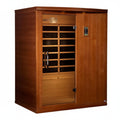
| Far Infrared Sauna Room with Low EMF Technology - Solid Wood | Comparing an indoor solid-wood far-infrared cabin | The supplied description explicitly identifies indoor use | Low-EMF wording alone does not establish measurement conditions or seated comfort |
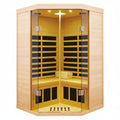
| 2-person corner far infrared sauna room | Households evaluating shared use | Corner-format alternative to a single-user layout | Additional capacity does not establish a smaller installed footprint |
| Portable infrared enclosure | Homes where packing equipment away is a priority | Alternative to a permanent wood-cabin format | Compare setup, storage and seating separately; portability does not establish comfort |
A wood cabin gives your wellness area a defined enclosure, but it also occupies dedicated floor space. A portable format changes that commitment, while adding a setup-and-storage decision. Neither format wins without reference to your room and routine.
The following Aurevia-Wellness candidates match the infrared wood-cabin category. Check their complete specifications against your measurements before selecting either.


Common mistakes compact-home owners make
Treating one-person capacity as a dimension
A single-user label does not tell you whether your shoulders, knees or feet fit comfortably. Compare interior seating measurements and the installed footprint as separate requirements; passing one check does not mean the sauna passes both.
Assuming a corner location saves space
A corner cabinet still needs door clearance, assembly access and the manufacturer's specified spacing. Tape out the complete arrangement before treating an otherwise unused corner as a workable installation site.
Choosing by heater count or spectrum wording
More heating plates and broader spectrum terminology do not, by themselves, establish a better experience or health outcome. Prioritize documented heater placement, usable seating and clear operating instructions over an impressive-looking specification list.
Decorating before checking the installation
Shelving, rugs and storage can interfere with access or conflict with installation instructions. Set the appliance layout first, then add only furnishings that preserve the required clearances and an unobstructed exit.
FAQ
What's the best 1 person infrared sauna for a small home?
The best 1 person infrared sauna is the model that meets your room, electrical and seated-comfort requirements. Compare its full installed footprint, not just its exterior cabinet dimensions.
How much space do I need for a one-person infrared sauna?
You need the cabinet footprint plus the manufacturer's required clearances, door-opening space and installation access. Obtain the exact model's dimensions and manual before choosing a location.
Can I plug a one-person infrared sauna into a regular outlet?
Only use an outlet and circuit that meet the exact sauna's electrical requirements. A matching plug or voltage does not establish that the circuit is suitable.
Is a two-person corner sauna better for a small room?
A two-person corner sauna is better only when its complete installed layout fits and the extra seating serves your needs. Corner placement alone does not establish that it uses less space.
Does a full-spectrum sauna also provide red light therapy?
Full-spectrum infrared wording alone does not establish that a sauna includes a separate red light therapy system. Check the listed components and documentation for the exact model.
How long should I use my first infrared sauna?
Follow the operating instructions for the exact sauna rather than a universal session recommendation. Seek medical advice when your health, pregnancy or medication raises questions about heat exposure, and stop if you feel unwell.
Are low-EMF claims enough to choose a sauna?
Low-EMF wording is not enough to choose a sauna. Request measurement conditions and assess electrical requirements, heater layout, comfort and installation suitability separately.
Can I install an indoor infrared sauna on a covered patio?
Install an indoor infrared sauna on a covered patio only if the manufacturer explicitly permits that environment. A roof over the patio does not establish protection suitable for an indoor appliance.
One last thing
Before committing, sit inside your taped floor outline with the proposed door area marked and the bench position recreated. Then stand up and walk out as you would after a session.
If entering or leaving requires moving furniture, choose a different layout. A private wellness sanctuary should preserve the everyday function of your home, not make you rearrange it each time you want to use the sauna.