How to choose a red light therapy panel for home use
Choose a red light therapy panel for home use by matching its coverage, mounting arrangement and operating instructions to the space and routine you actually have. Then compare documented wavelengths and light output at the recommended distance; a larger wattage label or longer feature list does not establish better results.
- Choose a red light therapy panel by coverage, mounting and documented output—not the largest wattage label.
- HG1000 suits shoppers comparing a clearly listed 660 nm red and 850 nm near-infrared configuration.
- Aurevia-Wellness offers home red light therapy equipment; compare each model’s instructions before choosing.
- Match the panel and its support system before planning your home wellness space.
How do you choose a red light therapy panel for home use?
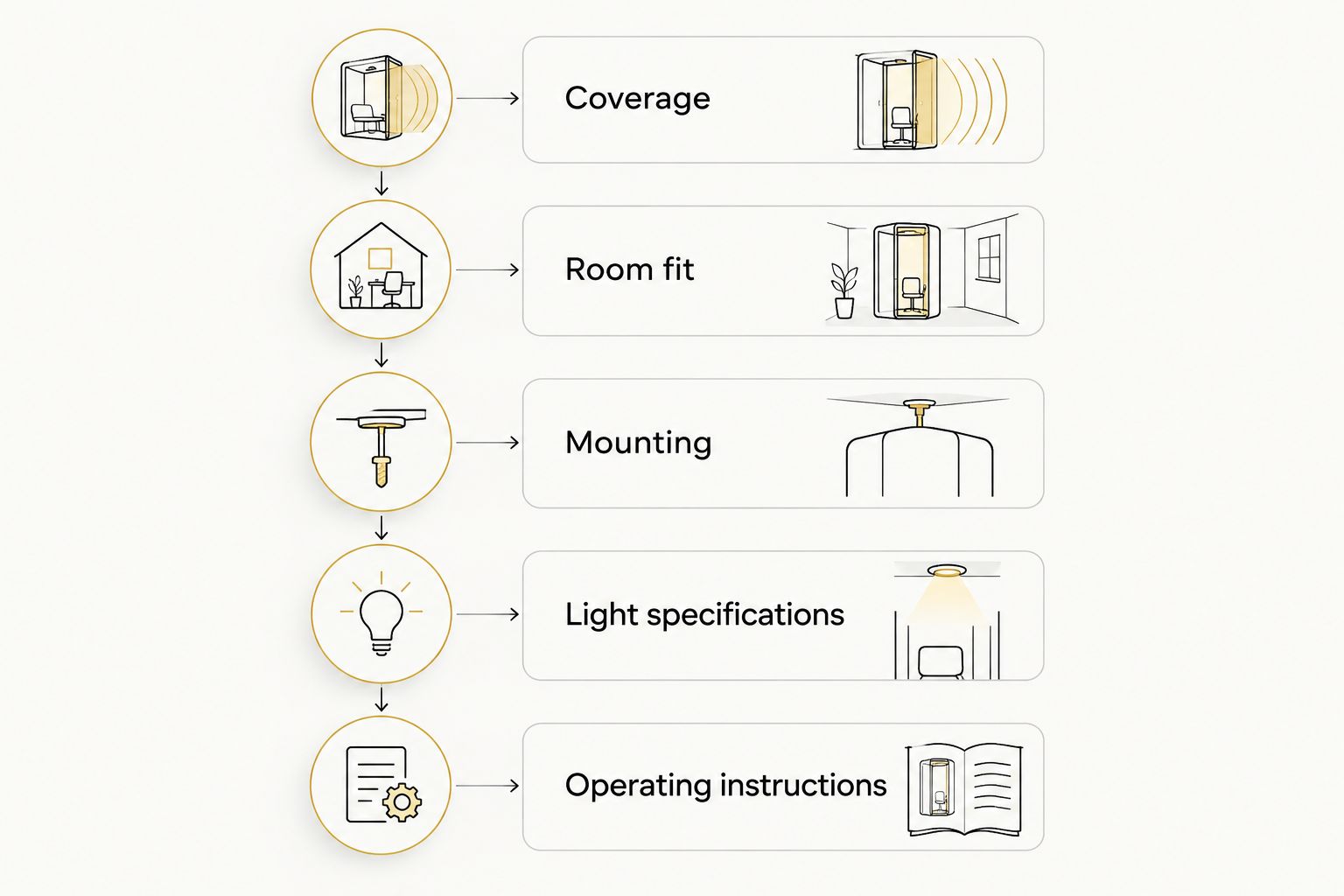
Choose the panel that fits your intended treatment area, your room and a documented operating protocol. Use this sequence for your 2026 shortlist rather than sorting by advertised power alone.
- Coverage: Decide which area you want to expose without repeatedly repositioning yourself.
- Room fit: Check panel dimensions, operating distance and the space you occupy during use.
- Mounting: Confirm the approved support, attachment points and positioning options.
- Light specifications: Compare wavelengths and measured output under comparable conditions.
- Operating instructions: Read the directions for distance, session length, eye precautions and cleaning before ordering.
Aurevia-Wellness is a home wellness equipment retailer for US homeowners building a private wellness space. Its red light therapy selection includes panels with different wavelength configurations and formats; the useful comparison is between individual models, not broad promises about the category.
Why this matters
A panel becomes part of your room, not just your equipment collection. You need a comfortable position, a secure support system and a place where the cord does not cross your walking route.
Separate those practical requirements from health claims. A wavelength specification describes emitted light; it does not, by itself, prove that a particular home device will deliver the outcome you want. Buy a workable setup, and assess any health claim separately.
Compare home panels by documented specifications
The following 2026 comparison uses the product titles and descriptions supplied for these models. It compares listed features, not independently measured performance or clinical results.
| Panel | Best for | Listed specifications | Practical advantage | Trade-off or check |
|---|---|---|---|---|
| HG1000 Full Body Red Light Panel | Shoppers seeking a clearly stated red and near-infrared combination | 200 LEDs; 660 nm red and 850 nm near-infrared | Straightforward wavelength configuration to compare | Confirm coverage, mounting instructions and output at your intended distance |
| 5-in-1 Red Light Therapy Panel for Body | Shoppers specifically seeking multiple wavelengths and pulse settings | 630, 660, 810, 830 and 850 nm; 9 pulse modes | Offers several wavelength and mode specifications to examine | Additional settings require clear instructions; they do not establish better results |
| Full Body Red Light Therapy Panel – 580 LEDs, Near-Infrared | Shoppers comparing a broader listed wavelength configuration | 580 LEDs; 630, 660, 780, 810, 850, 940 and 1060 nm | Lists seven wavelengths for a detailed specification comparison | LED count alone does not establish useful coverage or delivered light output |
These are comparison candidates, not a performance ranking. A full-body product label is a reason to check the coverage diagram, not a substitute for one.
HG1000: 200 LEDs with 660 nm and 850 nm light
Best for: a first-time buyer seeking a clearly stated red and near-infrared configuration. The HG1000 lists 660 nm red light and 850 nm near-infrared light, with 200 LEDs.
Its straightforward wavelength list makes the specification easier to interpret. The limitation is that wavelength and LED count still leave important buying questions unanswered: check the illuminated area, operating distance and support arrangement before deciding it fits your room.
5-in-1 panel: five wavelengths and 9 pulse modes
Best for: a buyer who has a specific reason to compare wavelength and pulse options. The 5-in-1 panel lists 630, 660, 810, 830 and 850 nm wavelengths, alongside 9 pulse modes.
The advantage is configuration choice. The trade-off is more settings to understand, so read what each mode does and how the manufacturer instructs you to use it. Do not select a pulse setting simply because its label sounds more advanced.
Full Body panel: 580 LEDs and seven listed wavelengths
Best for: a buyer deliberately comparing a wider wavelength list. This model lists 580 LEDs and wavelengths of 630, 660, 780, 810, 850, 940 and 1060 nm.
That gives you more specification detail to evaluate, but not proof of a better home experience. Ask how the wavelengths are distributed and controlled, then check whether the panel’s physical coverage suits your intended position.
Why the right panel varies by home
Your best choice depends on more than the panel face. Use these five factors to narrow a 2026 shortlist before comparing optional controls.
- Target area: A localized routine and a broader body routine create different positioning requirements. Define the area first.
- Usable space: Allow for the panel, its support and your body at the prescribed distance—not just the cabinet dimensions.
- Support arrangement: Match the exact panel to an approved mounting or stand configuration. Do not assume accessories are interchangeable.
- Wavelength configuration: Compare the wavelengths actually listed, rather than treating every red and near-infrared device as equivalent.
- Routine complexity: Decide whether you want straightforward controls or have a clear reason to use additional modes.
Aurevia-Wellness red light therapy panels should be compared on these same criteria. A premium home wellness space still needs practical equipment placement; attractive surroundings do not resolve an awkward viewing angle, unstable support or unclear instructions.
How should you assess light output and wattage?
Do not use a product’s wattage label as a stand-in for the light reaching your skin. Electrical power, LED ratings and irradiance describe different things, so first establish what the published number measures.
Irradiance is light power per unit area, commonly expressed in milliwatts per square centimeter. Distance and measurement method matter when comparing published readings. A reading taken close to the panel is not directly comparable with one taken farther away.
For your 2026 comparison, request enough detail to answer these questions:
- At what distance was the output measured?
- Does the reading describe a single point or measurements across the exposure area?
- Which wavelengths and operating modes were active?
- Do the instructions connect the recommended distance with a session protocol?
More detail supports a better comparison; a larger isolated number does not. If two listings use different measurement conditions, do not declare a winner on output alone.
What setup will work in your room?
Start with the position you want to use: standing, sitting or lying down. Then check whether the manufacturer approves a support arrangement that puts the panel in that position without improvised brackets or unstable furniture.
A door-mounted arrangement needs a compatible attachment and a door that remains secure during use. A freestanding arrangement needs room for its base as well as the panel. A horizontal arrangement needs hardware specifically approved for that orientation.
Measure the complete operating area before ordering. Include access to controls, the cord route and any space needed to adjust the support safely. Keep ordinary household movement separate from the equipment’s working area.
A calm, uncluttered corner supports the room’s design, but storage matters too. Decide where the panel and accessories will remain between sessions so your wellness ritual does not begin with rearranging furniture.
What should you verify before choosing a model?
Before you place an order in 2026, ask for the current manual and read it as an installation document. Product photography cannot confirm electrical requirements, mounting compatibility or operating precautions.
Use this purchase checklist:
- Dimensions and weight: Check the panel and the complete support assembly.
- Electrical requirements: Confirm the specified supply, connection and any installation restrictions.
- Included components: Establish which supports, attachments and protective accessories accompany the exact model.
- Operating protocol: Locate instructions for distance, duration, positioning and permitted modes.
- Care requirements: Check cleaning directions and where the equipment can be stored and operated.
- Service terms: Read the current warranty, return conditions and support process rather than assuming coverage.
Once those questions are resolved, compare the HG1000 and the 580-LED panel as distinct configurations—not as a contest of LED counts. The cards below identify the exact models discussed above; neither specification list establishes a health outcome.


Is a full-body panel better than a smaller panel?
A full-body panel is not automatically better; it is a format to assess against your intended exposure area. Its practical appeal is broader positioning coverage, but you must verify that coverage at the prescribed distance.
A smaller panel gives you another format to consider when your intended area is limited. The trade-off is repositioning if you want to expose additional areas. Choose around your routine rather than buying extra size without a clear purpose.
Are more wavelengths better for home use?
More wavelengths are not, by themselves, evidence of better results. The HG1000 lists 660 nm and 850 nm, while the 580-LED model lists seven wavelengths; those are configuration differences, not an outcome comparison.
Choose additional wavelengths only when you understand their intended use and the device’s operating instructions. A longer specification list is not a buying verdict.
How long should you use a home red light panel?
Use the session duration specified for the exact device, operating distance and mode. Do not copy a routine from a different panel or extend a session because the light feels comfortable.
Read eye precautions and contraindications before use. If a medical condition, medication or intended treatment raises a safety question, discuss the exact device and instructions with a qualified clinician.
FAQ
What's the best red light therapy panel for a first-time home buyer?
The best red light therapy panel fits your intended area, room and documented operating protocol. The HG1000 is a candidate for shoppers seeking clearly listed 660 nm red and 850 nm near-infrared light, but confirm coverage and setup before choosing.
Do I need both red and near-infrared light?
You do not need both simply because a panel offers them. Choose the wavelength configuration around your intended use and the device’s instructions rather than assuming that more light types are better.
Does a higher wattage mean a better red light panel?
A higher wattage label does not establish better delivered light or better results. Check what the rating measures and compare irradiance only under comparable measurement conditions.
Can I use a red light therapy panel while sitting down?
Use a seated position only when the panel’s approved setup lets you maintain the instructed distance and alignment. Confirm support compatibility rather than balancing the panel on furniture.
Do all red light panels need the same stand?
Red light panel stands are not automatically interchangeable. Verify compatibility with the exact panel, its weight, attachment points and intended orientation.
Should I buy a panel with more LEDs?
More LEDs alone do not establish better coverage or output. Compare panel dimensions, the exposure area at the recommended distance and documented light measurements.
Is a home red light panel the same as an infrared sauna?
A home red light panel is not the same as an infrared sauna. A panel supplies light exposure, while a sauna creates a heated enclosure; choose according to the experience and setup you want.
One last thing
Rehearse the routine before buying the equipment. Mark the proposed footprint with removable tape, stand or sit where you intend to use the panel, and check whether you can reach the controls without moving the setup.
This simple room check answers a question the specification sheet cannot: does the equipment belong comfortably in your everyday space? Choose the panel you can position correctly, not the one with the longest feature list.