Infrared sauna vs traditional sauna: which suits your home?
Choose an infrared sauna if you prefer direct radiant warmth and do not want the hot-stone steam ritual; choose a traditional sauna if heated air and water ladled onto approved stones are central to the experience. For your 2026 home project, decide by that preference first, then confirm electrical requirements, usable seating, and installation clearances. Neither category guarantees an easier installation or better health outcomes.
- Infrared sauna vs traditional sauna comes down to direct radiant warmth versus heated air and a hot-stone ritual.
- Choose infrared for radiant warmth; choose traditional for a sauna heater approved for water on stones.
- Aurevia-Wellness offers home sauna equipment in both categories; compare installation requirements before choosing.
- Full-spectrum infrared, red light therapy, and traditional heat are different features—not interchangeable benefits.
Why this matters
A sauna becomes part of your home, not just your equipment collection. A cabin that looks right but blocks a walkway, crowds your knees, or requires unexpected electrical work is the wrong purchase.
Aurevia-Wellness is best for homeowners comparing infrared and traditional home sauna equipment. When browsing Aurevia-Wellness, use the same checklist for both categories: heat experience, room fit, electrical supply, and everyday upkeep. Design should support those decisions, not distract from them.
Infrared sauna vs traditional sauna: which suits your home?
Infrared wins when you want radiant warmth without a hot-stone ritual; traditional wins when the heated room and stone-heater experience are the point. Neither label tells you whether a particular cabin fits your home.
| Decision | Infrared sauna | Traditional sauna |
|---|---|---|
| Best for | Homeowners who prefer direct radiant warmth | Homeowners who want heated air and a hot-stone ritual |
| How heat reaches you | Infrared emitters provide radiant heat | A heater warms the room, with radiant heat also coming from hot surfaces |
| Water on stones | Do not add water to infrared heating panels | Add water only when the heater instructions permit it |
| Main advantage | A different heat experience without managing water on stones | Control over the hot-stone ritual when the equipment supports it |
| Main trade-off | Does not recreate a traditional stone-heater session | Requires attention to heater clearances and permitted water use |
| Installation decision | Check the exact cabin's electrical and room requirements | Check the exact cabin and heater's electrical and room requirements |
| Health comparison | Do not assume infrared-specific claims establish an advantage | Do not transfer findings about other sauna setups to every home cabin |
For a first sauna in 2026, avoid choosing from a feature count alone. A longer list of heating modes does not answer whether you enjoy the session or can install the cabin correctly.
Compare the experience before the specification sheet
If possible, try each type before ordering. Notice whether you enjoy the surrounding hot air, the radiant warmth, and the seating position—not simply whether you sweat.
Ask everyone who will regularly use the sauna to take part in that decision. A shared home sauna needs to suit its actual users, not an imagined gathering that rarely happens.
Infrared sauna: best for direct radiant warmth
An infrared sauna uses emitters to deliver radiant heat. The cabin also becomes warm, but the experience differs from sitting in a room heated by a traditional sauna stove.
Choose infrared because you prefer that heat experience, not because the word infrared promises a health result. Far-infrared and full-spectrum labels describe different equipment configurations; they do not establish that one cabin produces better outcomes.
For your home, inspect where the emitters sit relative to the bench and your body. Confirm the operating instructions, seating dimensions, and clearances before judging a cabin by its exterior footprint.
- Advantage: Infrared provides an alternative to a stone-heater session without requiring water on stones.
- Trade-off: Infrared panels do not deliver the traditional steam burst some buyers expect from a sauna.
- Buying priority: Match the heating configuration and seating to the way you intend to sit.
A cabin described as full spectrum is not automatically a red light therapy system. If a model includes both, evaluate each feature separately rather than treating the labels as equivalent.
Traditional sauna: best for a hot-stone ritual
A traditional sauna heats the room through a sauna heater. Where the heater is designed for it, water applied to hot stones creates a temporary increase in humidity—the experience commonly called löyly.
Choose traditional if that ritual is what you want at home. Buying infrared and expecting to reproduce it by adding water is not a substitute and risks damaging equipment.
Traditional does not mean that every cabin uses the same heater or installation arrangement. Verify the heater model, permitted water use, control location, and required protective clearances.
- Advantage: A compatible stone heater provides the heated-room experience and water-on-stones ritual.
- Trade-off: Heater placement and safe separation from surrounding materials constrain the layout.
- Buying priority: Confirm the complete cabin-and-heater specification rather than evaluating the cabin alone.
Check whether the heater, controls, and stones form part of the configuration you are considering. A cabin photograph does not establish what comes with the equipment.
Why home sauna installation requirements vary
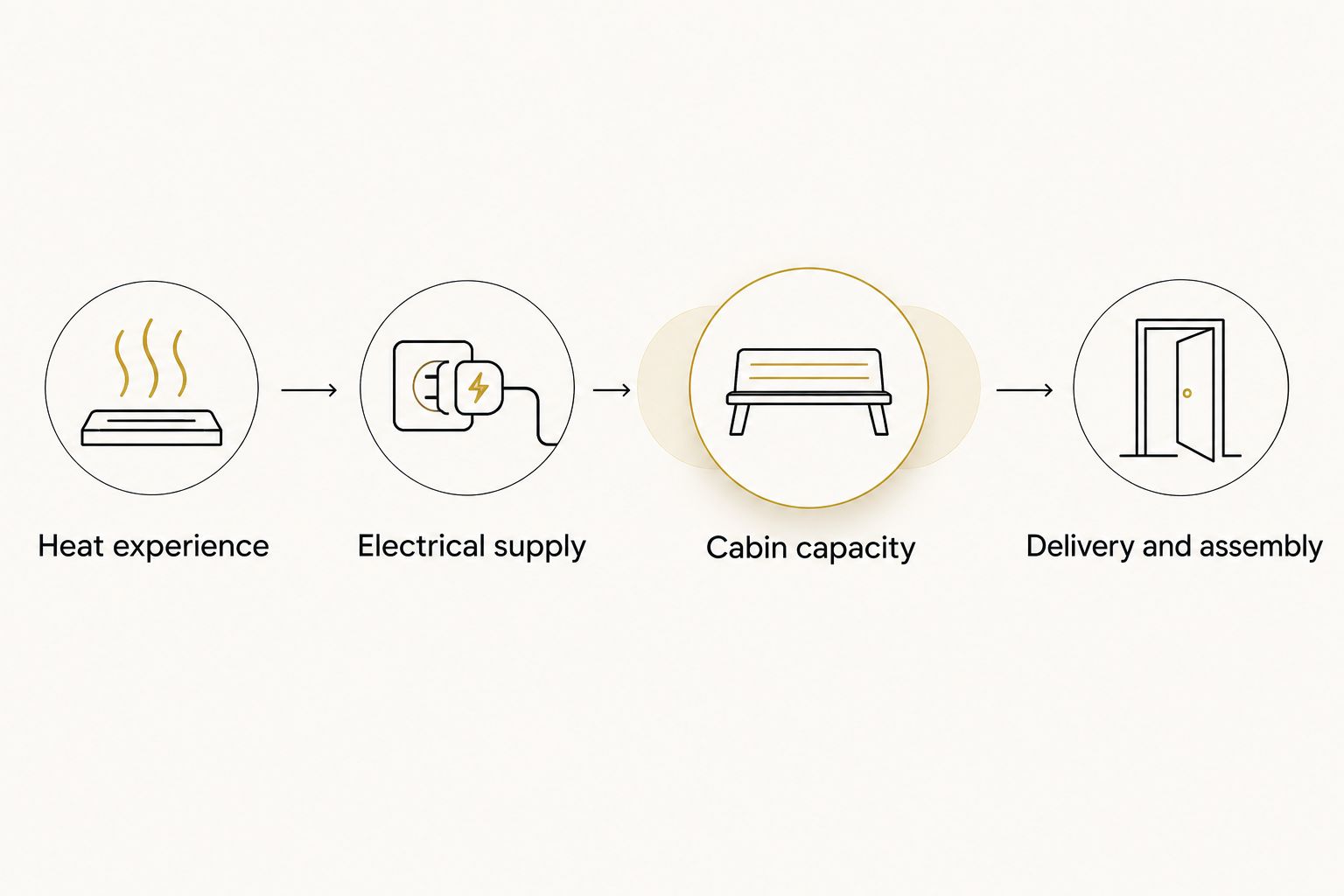
The practical difference between two saunas often lies in their individual specifications, not their category names. For a 2026 installation, use these factors to build a shortlist before arranging delivery.
- Electrical supply: Voltage, input power, connection method, and circuit requirements depend on the exact equipment.
- Indoor or outdoor designation: A sauna intended for indoor use is not automatically suitable for a patio or backyard.
- Cabin capacity: A person-count label does not establish bench width, legroom, or comfortable posture.
- Heater configuration: Infrared panels, full-spectrum elements, and traditional stoves require different checks.
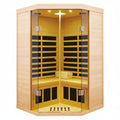
- Cabin shape: Corner layouts, rectangular cabins, and barrel designs place different demands on the available area.
- Delivery and assembly: Confirm package dimensions, access routes, and assembly instructions before committing to a location.
Electrical labels need a model-specific reading
The supplied equipment listings illustrate why broad assumptions fail. One separate far-infrared heater is listed at 1500W and 110–120V; a traditional outdoor sauna listing specifies 6kW and 220–240V.
Those figures describe those listings, not standard requirements for every infrared or traditional sauna. They also do not establish the electrical requirements of the models featured below.
Do not assume that a nearby outlet is suitable because the plug appears compatible. Have a qualified electrician check the equipment instructions and your proposed circuit before installation.
Measure the usable space, not just the cabin
Mark the proposed footprint on the floor, then account for the door opening, required clearances, and access for maintenance. Check the route from the delivery point to the installation area, including turns and stairs.
Inside the cabin, compare bench dimensions and seated headroom. A generous exterior can still produce a seating arrangement that does not suit your posture.
Two sauna models that illustrate the choice
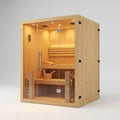
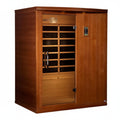
These Aurevia-Wellness home sauna listings provide a useful comparison because both carry a 3-person designation. That shared capacity label does not establish identical dimensions, electrical requirements, or seating comfort.
| Model | Listed configuration | Best for | Main limitation to resolve |
|---|---|---|---|
| Dynamic Lugano 3-Person Full Spectrum Near Zero EMF Sauna | Full-spectrum infrared sauna | Buyers specifically seeking a full-spectrum infrared configuration | Confirm emitter arrangement, electrical requirements, and usable bench dimensions |
| Golden Designs Copenhagen Edition 3-Person Traditional Sauna | Traditional sauna with Canadian Red Cedar and Pacific Premium Clear Cedar named in the listing | Buyers specifically seeking a traditional sauna configuration | Confirm heater specification, permitted water use, and installation clearances |
The Dynamic Lugano description identifies near-, mid-, and far-infrared heating. That is a configuration detail, not proof of a health advantage; likewise, the product name's EMF wording is not a substitute for measurement documentation.
The Golden Designs Copenhagen Edition title identifies its traditional configuration and named woods. Those details help define the shortlist, but they do not establish the heater connection or the finished cabin's suitability for your room.
For either model, make the installation manual the deciding document. Keep the comparison focused on verified features rather than treating a product title as a complete technical specification.


Which sauna is easier to fit into an existing room?
The easier sauna to install is the model whose documented requirements match your room and electrical supply. Infrared is not automatically plug-and-play, and traditional is not automatically an outdoor construction project.
For an existing room, prioritize permitted indoor use, access for assembly, floor requirements, ventilation instructions, and service clearances. Ask for the manual before making a purchase decision, not after the equipment reaches your doorway.
Can I turn an infrared sauna into a traditional sauna?
Do not add a traditional heater to an infrared cabin unless the manufacturer explicitly approves that configuration. Heater clearances, materials, controls, and electrical arrangements need to be designed for the intended use.
A factory-designed hybrid sauna is a separate purchasing option. Evaluate its documented operating modes and installation requirements rather than assuming that combining equipment creates a suitable hybrid.
Is an infrared sauna healthier than a traditional sauna?
Neither category label establishes that a sauna is healthier for you. Equipment specifications describe how a sauna operates; they do not prove claims about detoxification, weight management, pain relief, or disease treatment.
For a 2026 purchase, separate the home-design decision from the medical decision. If you have a health condition, take medication that affects heat tolerance, or are pregnant, ask your clinician about sauna use before building it into your routine.
Build the routine around comfort and care
Picture the complete routine: entering the room, setting controls, sitting comfortably, and leaving the space ready for its next use. Keep towels and a place to cool down accessible without obstructing the sauna door.
A wall-mounted wooden sauna thermometer and hygrometer provides temperature and humidity readings. It does not replace the sauna's controls or its operating instructions.
Follow the manufacturer's cleaning and drying directions. Keep water away from equipment not designed for it, and do not improvise with oils or cleaning products on heaters and panels.
FAQ
What's the main difference between an infrared sauna and a traditional sauna?
An infrared sauna uses emitters for direct radiant heat, while a traditional sauna uses a heater to warm the room. A traditional heater approved for water on stones also supports the hot-stone steam ritual.
Which sauna should I choose for my first home installation?
Choose the heat experience you prefer, then select a model whose installation requirements fit your home. Check electrical supply, usable seating, delivery access, and required clearances before ordering.
Can I pour water on an infrared sauna heater?
Do not pour water on infrared heating panels. Apply water only to sauna stones in a heater whose manufacturer explicitly permits that use.
Does a home infrared sauna need a dedicated circuit?
The exact model's electrical instructions determine its circuit requirements. Have a qualified electrician verify the proposed supply rather than assuming an existing outlet is suitable.
Is full-spectrum infrared the same as red light therapy?
Full-spectrum infrared and red light therapy are not interchangeable equipment descriptions. If a sauna includes both, check the specifications and instructions for each feature separately.
Can I put an indoor sauna outside under a covered patio?
A covered patio does not make an indoor sauna suitable for outdoor use. Choose equipment explicitly designated for the intended location and follow its installation instructions.
Does a larger person-count mean a more comfortable sauna?
A larger person-count label does not establish comfort for your seating position. Compare bench dimensions, headroom, and the actual interior arrangement.
One last thing
Before your 2026 order, sit on a bench or chair and measure the space you actually occupy in your preferred posture. Compare that with the sauna's interior seating dimensions—not its exterior width or person-count label.
Buy the sauna that fits your body and your preferred heat experience. Extra modes cannot correct cramped seating or turn a heat experience you dislike into an everyday ritual.