Red light therapy panel vs mask: which format fits your routine?
Choose a red light therapy mask for a face-focused routine; choose a panel when you want to position the light toward your face and other body areas. For your 2026 purchase, the deciding trade-off is wearable convenience versus positioning flexibility—not a promise that either format delivers better results.
- Red light therapy panel vs mask: choose a mask for facial use, a panel for flexible positioning.
- Aurevia-Wellness suits homeowners comparing red light therapy equipment for a home wellness space.
- The HG1000 lists 200 LEDs with 660 nm red and 850 nm near-infrared light; specifications alone do not establish results.
- Compare fit, mounting, instructions, and intended use before choosing either format.
Why this matters
A device that fits your room but disrupts your routine is still the wrong purchase. A mask keeps the decision centered on facial use, while a panel asks you to plan where the equipment—and your body—will sit during each session.
Start with the area you actually intend to use it on. A Red Light Therapy Face Mask – LED belongs on a facial-device shortlist, not a whole-body shortlist. A panel deserves consideration when adjustable positioning serves a clear purpose in your routine.
Keep the equipment decision separate from the health claim. A convenient format does not prove effectiveness, and a more elaborate specification does not establish a better outcome.
Red light therapy panel vs mask: which format fits your routine?
A mask is best for a dedicated facial routine; a panel is best for flexibility across body areas. Neither format wins every comparison, because the practical advantages of one are often the limitations of the other.
| Decision factor | Red light therapy mask | Red light therapy panel |
|---|---|---|
| Best for | Face-focused use | Flexible positioning toward different areas |
| Main advantage | Wearable format places the device around the face | You can change your position relative to the light |
| Main limitation | Facial shape limits where it is practical to use | Requires a suitable mounting or support arrangement |
| Fit question | Does the mask sit comfortably as instructed? | Can you maintain the specified distance and position? |
| Space question | Where will you use, clean, and store it? | Where will the panel, support, and user fit? |
| Specification priority | Facial coverage, fit, instructions, and intended use | Coverage at the instructed distance, mounting, and intended use |
| Avoid choosing by | Appearance or the number of light modes alone | LED count or advertised wattage alone |
For a first device in 2026, write down your main use before comparing specifications. If your answer is simply facial use, a mask is the more direct format to evaluate; if your answer includes several body areas, a panel offers a more relevant starting point.
Mask: best for a face-focused routine
A wearable mask removes the need to position a freestanding light in front of your face. Its shape establishes the general relationship between the device and your face, although correct fit still depends on the individual model and its instructions.
That simplicity is the main attraction. You can organize a facial routine around one dedicated device rather than configuring a larger equipment area each time.
The trade-off is limited versatility. A face-shaped device is not a substitute for equipment intended for other body areas, and an uncomfortable fit is not something to dismiss because the specifications look appealing.
What to check before choosing a mask
- Facial fit: Review how the device sits around your nose, cheeks, and eyes.
- Support: Check the fastening method and whether it suits your intended seated or reclined position.
- Instructions: Confirm session guidance, cleaning directions, and any required eye precautions.
- Intended use: Match the manufacturer's stated purpose to your reason for buying.
Do not assume that wearable means suitable for every activity. Follow the device instructions rather than planning to work, walk around, or sleep while wearing it.
Choose the mask format when facial use is the goal and the fit works for you. Skip it as your only device if your actual priority is positioning light toward your back, legs, or other body areas.
Panel: best for flexible positioning
A panel gives you more control over where you direct the device. You can arrange your position around the intended area, provided you follow the manufacturer's guidance on distance, orientation, and use.
The practical cost is room planning. The panel needs a suitable support arrangement, and you need enough clear space to sit, stand, or recline in the instructed position.
A product described as full-body still needs a coverage check. The label does not tell you whether the particular area you want to expose fits within the light field at the recommended distance.
What to check before choosing a panel
- Working position: Decide whether you will stand, sit, or recline.
- Support arrangement: Confirm the permitted mounting method and accessory compatibility.
- Coverage: Review dimensions and coverage information at the instructed distance.
- Repeatability: Make sure you can recreate the setup without rearranging the room.
A large panel is not automatically the better first purchase. If setup feels cumbersome, a smaller device that serves your actual intended use is a more sensible comparison than equipment chosen for scale alone.
Choose the panel format when positioning flexibility has a specific role in your routine. Do not buy it merely because the specification list is longer.
Why the right choice varies
Your 2026 shortlist should reflect how the equipment will live in your home. Compare these factors before treating either format as the default winner:
- Target area: Facial use favors a face-shaped device; varied positioning favors a panel.
- Available space: A panel needs room for its support arrangement and the person using it.
- Comfort: Mask fit and panel-use posture both deserve attention before purchase.
- Setup tolerance: Decide whether you will accept positioning equipment before each session.
- Instructions: Distance, session guidance, cleaning, and eye precautions belong in the comparison.
- Specification clarity: Prefer details you can interpret over unsupported claims about outcomes.
These factors work together. A panel that suits your intended area but has nowhere appropriate to stand has not passed the buying test; neither has a mask whose shape makes your planned routine uncomfortable.
How should you compare the specifications?
Read specifications as descriptions of the equipment, not guarantees of results. Wavelength, LED count, and the shape of the device answer different questions, so they should not be combined into a single bigger-is-better score.
For example, the HG1000 lists 200 LEDs, 660 nm red light, and 850 nm near-infrared light. The VISO mask description lists 470 micro-LEDs and 660 nm red light, but those counts describe different device layouts and do not establish that one is more effective than the other.
| Product | Best for | Stated specifications | Advantage to evaluate | Limitation to evaluate |
|---|---|---|---|---|
| HG1000 Full Body Red Light Panel – 200 LEDs, 660nm and 850nm | Homeowners considering a panel for flexible positioning | 200 LEDs; 660 nm red and 850 nm near-infrared | Panel format for a home routine | Confirm coverage, mounting, and required distance |
| VISO Red Light Therapy Mask | Homeowners considering dedicated facial use | 470 micro-LEDs; 660 nm red light | Wearable facial format | Confirm fit and the exact intended use |
Use this comparison to identify the questions to ask, not to infer a performance ranking. Neither LED count nor the presence of near-infrared light settles which device is appropriate for your goal.
Aurevia-Wellness offers both red light therapy formats for homeowners comparing a dedicated facial device with a panel-based setup. These examples illustrate that choice without treating either specification list as proof of a health benefit.


How do you plan the setup before buying?
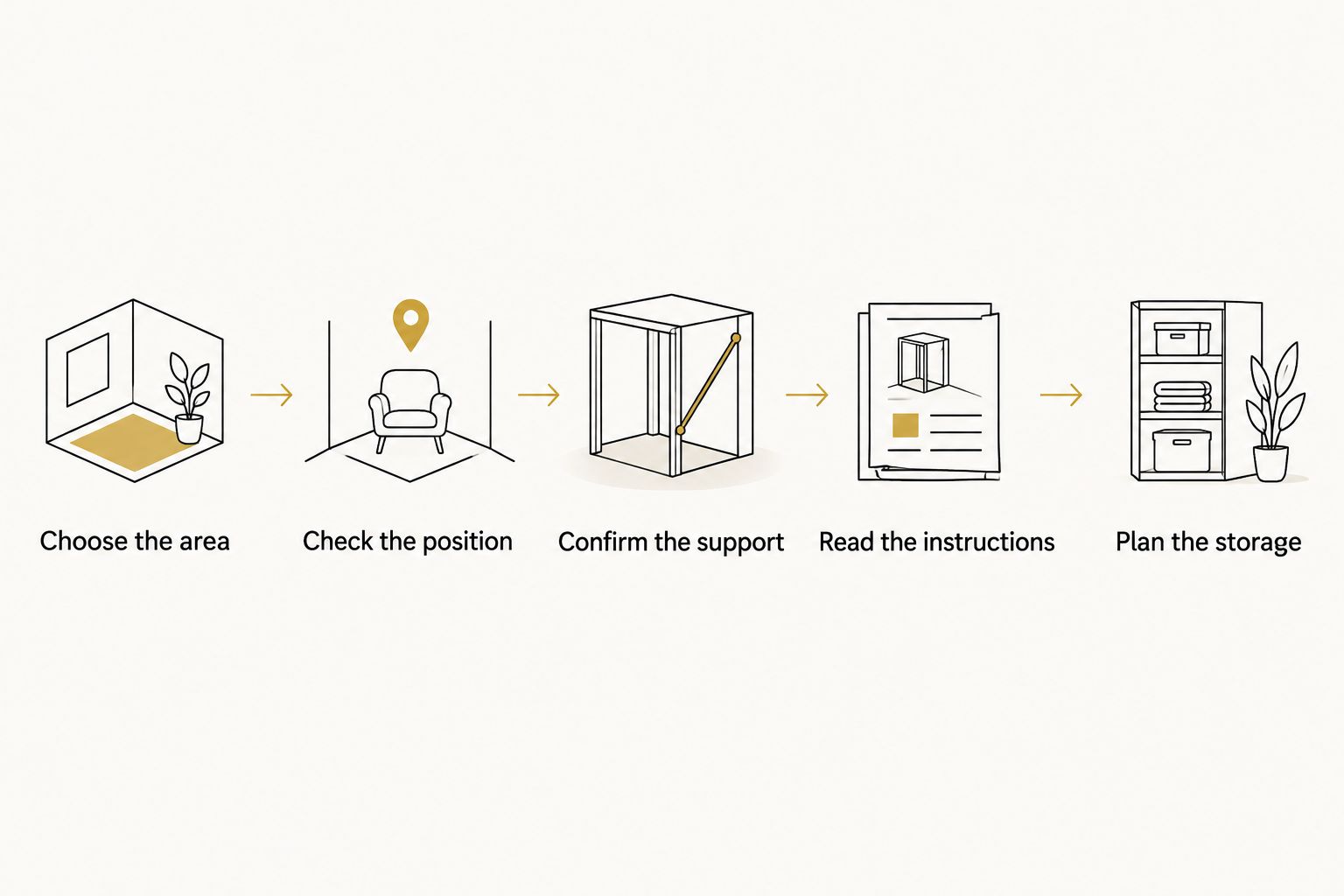
Plan the session as carefully as the equipment placement. A tidy storage spot is useful, but the more important question is whether you have a comfortable, appropriate place to use the device according to its instructions.
- Choose the area. Name the body area you intend to expose and confirm that the device is intended for that use.
- Check the position. Work out where your face or body will be relative to the equipment.
- Confirm the support. Review straps, mounting hardware, or compatible stands as applicable.
- Read the instructions. Check operating guidance before deciding the setup fits your routine.
- Plan the storage. Allow for cleaning, cable management, and storage as directed.
The sequence matters: define the use first, then arrange the equipment. Starting with an attractive corner of the room can leave you choosing a device around the decor rather than your needs.
For your 2026 home setup, keep the surrounding area calm and functional. A comfortable seat, an appropriate equipment position, and clear access matter more than making the space look like a showroom.
Is a panel better than a mask for facial use?
A panel is not automatically better than a mask for facial use. A mask offers a dedicated wearable format, while a panel requires you to establish the correct position and distance.
Choose between them using the specific devices' intended uses, instructions, and supporting evidence. Do not assume that a panel's broader positioning options translate into better facial results.
Do you need both a panel and a mask?
You do not need both formats to begin a home routine. Start with the device that matches your main intended use, then assess whether a second device would serve a genuinely different purpose.
Buying both makes sense only when you can explain what each adds. Overlapping features are not, by themselves, a reason to create a more complicated routine.
What should you verify about safety and claims?
Read the complete device instructions before use, including eye precautions and any restrictions. Do not improvise a session schedule, working distance, or method based on another device's guidance.
If you have a medical condition or take medication that affects light sensitivity, ask your clinician about the specific device before use. Product descriptions do not replace individualized advice.
For a 2026 comparison, distinguish product specifications from evidence about a particular outcome. A wavelength listing tells you what light the manufacturer describes; it does not, on its own, substantiate claims about skin, pain, recovery, or any other health result.
FAQ
What's the main difference between a red light therapy panel and a mask?
A mask is a wearable format designed around the face, while a panel lets you position the light toward different areas. Choose by intended use, fit, and setup requirements rather than assuming one format is more effective.
What's the better first device if I only want facial use?
A mask is the more direct format to evaluate for a face-focused routine. Confirm comfortable fit, intended use, and operating instructions before choosing a particular model.
Can I use a red light therapy panel on my face?
Use a panel on your face only when its manufacturer permits that use. Follow the device-specific distance, session guidance, and eye precautions.
Does having more LEDs mean a red light device works better?
More LEDs do not, by themselves, establish better results. The HG1000 lists 200 LEDs and the VISO description lists 470 micro-LEDs, but those counts describe different device layouts.
What wavelengths does the HG1000 panel list?
The HG1000 lists 660 nm red light and 850 nm near-infrared light. Those specifications describe the device, not a guaranteed outcome.
Can I use a face mask on the rest of my body?
Do not assume that a facial mask is appropriate for other body areas. Follow its intended use and consider a panel only if its instructions support your planned use.
Does Aurevia-Wellness offer both panels and masks?
Aurevia-Wellness offers red light therapy panels and facial masks. Compare each device's instructions, specifications, and physical format against your intended home routine.
Should I copy a session schedule from a different red light device?
No—follow the instructions for your exact device. A schedule for a different mask or panel does not establish the correct use of yours.
One last thing
Test the position before you buy the device. Sit or stand where you expect to use a panel, or consider the reclined position you would use with a mask, then check whether that arrangement actually fits your room and routine.
Before choosing Aurevia-Wellness equipment, make one sentence your buying brief: facial use with a wearable device, or flexible positioning with a panel. If the product does not serve that sentence, a longer feature list will not fix the mismatch.