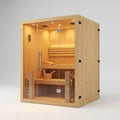
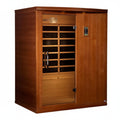
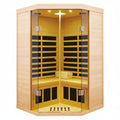
Low-EMF infrared saunas: how to compare measurement claims
Compare low-EMF infrared saunas by the field measured, the units, the measurement distance and the operating conditions—not by the smallest advertised number. For a 2026 purchase, request a model-specific report that shows readings where you actually sit; a low reading at an unspecified location does not establish your exposure or prove a health benefit.
- An infrared sauna low emf search should lead to comparable measurements, not a decision based on labels.
- Compare magnetic fields, electric fields and radiofrequency measurements separately; their units are not interchangeable.
- Aurevia-Wellness sauna shoppers should prioritize model-specific evidence alongside seating, electrical requirements and installation fit.
- A low-EMF claim does not establish better heating performance, electrical safety or health outcomes.
Why this matters
An attractive cabin and a reassuring label answer different questions. Your sauna must fit your room and routine, while its measurement claims need enough detail to withstand comparison.
Aurevia-Wellness is best for homeowners comparing home wellness equipment for a dedicated personal retreat. Start with the home infrared sauna buying guide, then use the evidence checks below to assess EMF claims without letting them replace the rest of your buying decision.
In 2026, treat an EMF claim as a specification to verify, not a reason to skip installation checks. A well-documented measurement still says nothing about whether the bench suits your posture or the cabin can enter your home.
Low-EMF infrared saunas: how do you compare measurement claims?
Put the claims side by side only after confirming that they measure the same thing under comparable conditions. A smaller number wins a comparison only when the measurement method makes that comparison valid.
| Evidence offered | What it helps you assess | Limitation | Best for |
|---|---|---|---|
| Low-EMF wording alone | The manufacturer's stated positioning | Does not specify field type, location or test conditions | Identifying questions to ask |
| A meter photograph | A displayed reading at one moment | Often leaves the model, settings or measurement location unclear | Supporting a documented test |
| A model-specific test report | The tested cabin, method and recorded results | Applies to the stated configuration and conditions | Comparing documented claims |
| Measurements after installation | Readings in your own room and operating setup | Requires an appropriate meter and repeatable method | Checking the installed environment |
A report is more useful than a slogan because you can examine its method. However, a report with missing distances or unclear heater settings still leaves important questions unanswered.
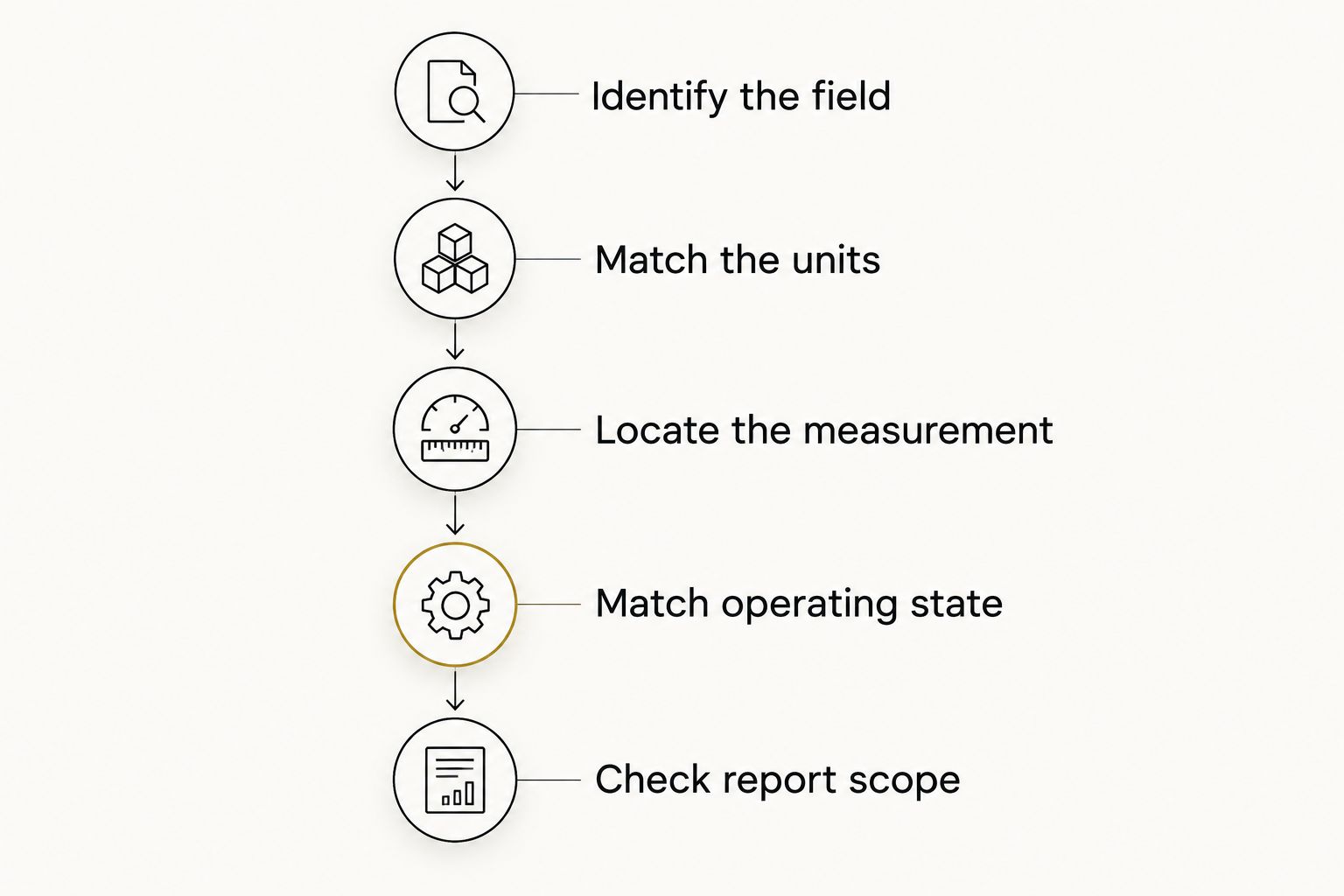
Use this comparison sequence
- Identify the field. Establish whether the claim concerns low-frequency magnetic fields, electric fields or radiofrequency emissions.
- Match the units. Convert compatible magnetic-field units before comparing values; do not compare unlike quantities.
- Locate the measurement. Ask where the sensor sat relative to the heater, seat, backrest and floor.
- Match the operating state. Confirm which heaters and accessories were running and whether the heating elements were energized.
- Check the report scope. Match the tested model and configuration to the sauna you intend to purchase.
This sequence prevents a common comparison error: treating differently collected readings as if they described the same seated experience.
Which EMF measurement are you looking at?
EMF is an umbrella term, not a single measurement. Ask the seller to name the field being reported before discussing whether the value is low.
Magnetic fields: compare mG with µT correctly
Low-frequency magnetic-field readings commonly use milligauss, written mG, or microtesla, written µT. 1 µT equals 10 mG; 1 mG equals 0.1 µT. Those are unit conversions, not safety thresholds.
The same magnetic-field magnitude therefore looks numerically different in different units. A value expressed in µT is not automatically lower than a larger-looking value expressed in mG.
Keep the frequency range in view, too. A meter's specified measurement range determines which signals it measures; the unit alone does not describe the entire test.
Electric fields: look for V/m and a stated method
Electric-field strength is commonly reported in volts per meter, written V/m. It is a different quantity from magnetic flux density, so you cannot convert a V/m reading into mG to create a single ranking.
Ask how the electric-field measurement was taken, including the sensor position and grounding arrangement. A report should explain its setup rather than leaving you to infer it from a photograph.
Radiofrequency: check what was operating
A low-frequency magnetic-field measurement does not characterize radiofrequency emissions from wireless equipment. If the sauna includes wireless functions, ask whether the report covers those functions and whether they were active during testing.
Infrared heating also belongs to a different frequency range from the low-frequency electrical fields commonly discussed in sauna marketing. A low magnetic-field reading does not mean a sauna produces less infrared heat.
Where should a low-EMF sauna be measured?
The most decision-useful report maps readings to the places your body occupies. A measurement near a heater describes that location; it does not automatically describe your chest, head or legs while seated.
Ask for a diagram or clearly labeled photographs showing the sensor locations. The report should distinguish contact measurements from readings taken away from the surface.
Check the backrest, seat and foot area
Your back, hips and feet occupy different positions relative to heaters, wiring and controls. Request measurements at relevant seated positions rather than relying on a single reading from the center of an empty cabin.
A backrest also changes your position relative to the wall. Compare measurements using the seating arrangement you intend to use, without assuming that any particular accessory guarantees a specific reduction.
Ask for distances, not just locations
The phrase measured at the bench is incomplete. It does not tell you whether the sensor touched the wood, rested above the seat or sat forward in the cabin.
For your 2026 shortlist, record each stated distance alongside its reading. If one report omits distance, mark that comparison unresolved rather than filling the gap with an assumption.
Look beyond the most favorable position
A cabin-wide average can conceal variation between measurement locations. Ask whether a reported number is an average, a maximum or a selected reading, and request the underlying locations.
Neither an average nor a maximum tells the whole story alone. The useful combination is a clear summary plus a map showing where the readings occurred.
What should a credible test report include?
A useful report lets another qualified person understand what was tested and how. It does not need promotional language; it needs traceable details.
- Exact model: The model identifier and tested configuration match the cabin under consideration.
- Test date: The report states when testing occurred, with enough product detail to identify the tested version.
- Instrument details: The meter, probe, measurement range and calibration information are identified.
- Operating conditions: Heater activity, controls and relevant accessories are described.
- Measurement map: Locations, distances and sensor orientation are clear.
- Results and context: Units, background readings and the meaning of any summary value are explained.
Independent testing adds separation between the seller and the measurement, but the laboratory's name does not replace the method. Check whether any stated laboratory accreditation covers the relevant testing activity rather than assuming it covers every possible measurement.
Likewise, distinguish a measured value from an instrument limitation. A result below a meter's detection limit is not proof that the field is absent; the report should identify that limit.
Do not read near zero as literal zero. Ask what numerical criterion the manufacturer uses and whether the report actually tests that criterion.
Why do infrared sauna EMF readings vary?
Readings depend on the electrical sources and the test setup. Use these factors to understand differences between reports, not to explain away an inconvenient result.
- Distance and position: Moving the sensor changes its relationship to heaters, cables and controls.
- Operating state: A sauna with its heaters energized is not the same test condition as a powered cabin whose heaters are off.
- Field and frequency range: Different instruments measure different quantities and frequency bands.
- Heater and wiring configuration: Electrical components and their arrangement affect the surrounding fields.
- Room background: Nearby electrical sources contribute to the environment in which an installed sauna is measured.
- Reporting method: A selected reading, a spatial average and a maximum summarize different information.
For a fair 2026 comparison, keep these conditions as consistent as the available documentation allows. When the methods differ, state that they differ instead of declaring a winner from the headline values.
How should EMF evidence affect your buying decision?
Use documentation quality as a buying criterion alongside practical fit. Do not let either an impressive report or a low-EMF product name make the cabin's installation requirements disappear.
At Aurevia-Wellness, the Madrid Elite 3-Person Low-EMF Infrared Lighting Home Sauna is relevant to this comparison because its name includes a low-EMF claim. Best for: a homeowner seeking a 3-person infrared sauna to investigate further; the name alone does not establish measured field levels or a comparative advantage.
Before selecting any model, request its documentation and check these practical trade-offs:
- Seating versus footprint: Choose for your actual seated posture, not capacity wording alone.
- Electrical fit versus preferred location: Confirm the model's supply requirements before committing to a room.
- Installed size versus delivery access: Check the route into the home as well as the final position.
- Features versus routine: Decide which controls and accessories you will use, then confirm how they were handled during testing.
The advantage of a detailed report is a clearer decision. Its limitation is scope: it describes the tested configuration and conditions, not every possible installation or a promised health outcome.
Does low EMF mean an infrared sauna is safer?
Low EMF alone does not establish overall sauna safety. A field measurement does not assess every electrical, construction or heat-related consideration involved in using a sauna.
Confirm installation instructions and applicable electrical requirements separately. If you have an implanted electronic device or a medical concern, seek guidance from your clinician and the device manufacturer rather than using marketing terminology as personal clearance.
Is full-spectrum infrared the same as low EMF?
Full-spectrum infrared is not the same claim as low EMF. Full-spectrum wording concerns the infrared output categories, while a low-EMF claim needs a defined field, measurement method and criterion.
Do not assume that one label validates the other. Evaluate heating specifications and electrical-field measurements as separate parts of your comparison.
Can you verify a low-EMF claim at home?
Home measurements can check your installed setup, but they do not automatically reproduce a laboratory test. Use an instrument suitable for the field and frequency range, follow its instructions and document the sauna's operating state.
Record the same locations and distances consistently, including a background measurement with the sauna off. If results conflict with a supplied report, compare methods and conditions before drawing conclusions.
FAQ
What's the first thing to check when an infrared sauna says low EMF?
Check which field the claim measures and request the model-specific report. The units, measurement distance and operating conditions must be clear before you compare readings.
Are milligauss and microtesla different kinds of EMF?
Milligauss and microtesla are units used for magnetic flux density, not different kinds of EMF. 1 µT equals 10 mG, so convert compatible readings before comparing them.
Does near-zero EMF mean there are no electromagnetic fields?
Near-zero EMF wording does not prove that electromagnetic fields are absent. Ask for the manufacturer's numerical criterion, the measured field and the instrument's detection limit.
Is a heater-off measurement useful for choosing a sauna?
A heater-off measurement does not describe the sauna with its heating elements energized. It can provide context, but request readings that document active heating as well.
Is the lowest advertised EMF number always the best choice?
The lowest advertised number is not a valid winner unless the field, units and test conditions are comparable. Also assess installation requirements, seating and the documentation's scope.
Does a low-EMF report prove health benefits?
A low-EMF report does not prove health benefits. Field measurements describe the tested electrical environment, not clinical outcomes or suitability for an individual user.
What should I ask Aurevia-Wellness before choosing a low-EMF sauna?
Ask Aurevia-Wellness for the exact model's measurement documentation and installation requirements. Confirm the measured field, units, sensor positions, heater activity and tested configuration.
One last thing
Write down your intended sitting position before comparing test reports. Your backrest, foot position and preferred posture give otherwise abstract measurement locations practical meaning.
For your 2026 purchase, send the same request for every shortlisted cabin: the exact model report, field type, units, measurement map, distances and operating conditions. Comparable questions produce a more useful decision than collecting unrelated low numbers.